#15 Alfred Eisenstaedt
Alfred Eisenstaedt was an American photographer who was born in Germany. At age 14 he shot his first roll of film and his photography stemmed from that. When he became a professional full-time photographer, he worked for Associated Press in Germany. He captured iconic moments like Hitler’s first meeting with the Prime Minister of Italy, the invasion of Ethiopia, but because of the Holocaust, his family moved to the United States given they were Jewish. Thus began his life in America. After World War II when he moved to the United States, and gained prominence he got his job with Life Magazine where he had 90 cover photos and over 2,500 photo stories in the magazine. He captured movie stars and celebrities on his 35mm camera with natural light and most of his shots were candid. Rather than creating images that were newsy and typical, he captured images that were of human interest. In 1989 he received the National Medal of Arts Award from George W. Bush at the White House. He died in 1995 at age 96.


From Left to Right
Mount Rushmore (1940), Albert Einstein (Princeton 1948), The drum major for the University of Michigan marching band high-steps as children follow suit (1950), Sen. John F. Kennedy and his daughter Caroline at home after the Democratic Party named him their 1960 presidential candidate (1960)
To me, Alfred Eisenstaedt had such amazing work because it captured the most iconic moments as moments, not as staged shoots. Even though he was a part of a lot of serious times and situations his photos are light-hearted and happy. His work is beautiful because it captures the memory that only a photo can do, the image of Caroline Kennedy speaks to that. The happiness on both their faces and the way she is dressed. So many people would take this when he gives his speech or when his daughter is dressed nicely. It is unique in that he had such a free mind. In addition, it is inspiring that he worked so much with Life and had so many photos published in his time. Overall I think his photos capture the essence of the time periods and the essence of each iconic moment.
“Alfred Eisenstaedt: 22 Unforgettable Photos by a Master.” Time, Time, http://time.com/3491299/unforgettable-eisenstaedt-22-amazing-photos-by-a-master/
“Alfred Eisenstaedt.” Wikipedia, Wikimedia Foundation, 29 May 2018, https://en.wikipedia.org/wiki/Alfred_Eisenstaedt
#14 Keith Carter
Keith Carter is an author, musician, educator, and artist. However, his photography is timeless and magical. His subject varies a lot, but he finds the hidden meaning in all of his photographs whether it be of nature, religion or people. His single mother raised him as a professional photographer. He studied at the Museum of Modern Art which expanded his photographic abilities and interests. He photographed what he knew, his hometown and stories. His photographs have been showcased and he has taken over 6,000 portraits of children. He was a graduate of Lamar University in Texas, and now he is a professor there teaching photography.


 From Left to Right
Two Deer Study #2 (2012), Bog Dog (2014), Study #1 (2014/2015)
His work is really fascinating to me because I think each piece has such a story and he can take something so simplistic and make it mean something. The vignette edges add a dreamy and almost unreal effect to all his images. To me too they all look very pure and peaceful amidst something beyond that which leaves me with questions and confusion. He can photograph a subject others can as well but make it mean something so much more.
“Buy, Sell, and Research Contemporary Art Online: Artnet.” Self-Portrait with Dog by Constantin Brancusi on Artnet, Sotheby's London, www.artnet.com/.
“Keith Carter (Photographer).” Wikipedia, Wikimedia Foundation, 25 May 2018, https://en.wikipedia.org/wiki/Keith_Carter_(photographer)
#13 Masao Yamamoto
Masao Yamamoto is a Japanese photographer that works with gelatin prints that highlight nature, landscapes, and nudists in Japan’s countryside. Some of his early work was done to have a “timeless” effect and so they were small palm-size photos, creased and unmatted. They were meant to be handled and it is said that the space around the photo and how it was shown was just as important as the photograph itself. More recently, his work has been showcased singularly, so he mattes and shows one photo instead of a series. Prior to all this work he was a painter and started photography to capture memories.


 From Left to Right
Tori (2016/2017), Kawa (2011), Omizuao (2003)
I really enjoy the contrast he has within his photos and how subtle they feel. Also, the reasoning behind his photography is really important and speaks to what his images show. He wants to capture memories within his work and in nature that is a really important and special place to do so.
“Masao Yamamoto.” Wikipedia, Wikimedia Foundation, 28 May 2018, https://en.wikipedia.org/wiki/Masao_Yamamoto
“Masao Yamamoto.” Yancey Richardson, www.yanceyrichardson.com/artists/masao-yamamoto.
#12 Emulation on Andy Small
Andy Small is a nature photographer who photographs flowers in particular. He is known for his use of color in his photography and his modern graphic style. His work is done to be very dramatic and focuses on the color aspects of nature. He began in fine arts, painting, and drawing which influenced the type of photography he partakes in now. In the UK he is known as one of the most original photographers because his work represents that of a painters and its attention to detail as well as shapes and patterns. Andy Small is not as much influenced by other artists but by other techniques of art.


From Left to Right-
Poppy, Helebore, Wisley Wild Flower Meadow (Unknown Dates)
This artist really drew me in because his focus on shallow depth of field and attention to detail. I like how Andy Small incorporated so much color and a balance of color in his pieces. Another aspect of his work that I enjoy so much is how simple a lot of his backgrounds are because he has focused so much on the subject which usually are the flowers. It is really inspiring because flowers are everywhere so it is a realistic subject to photograph and I love how unique and beautiful Andy Small makes his work.
For the photography itself, I am going to use images that are of flowers and focus on the detail and color of the flowers and paying close attention to photos with shallow depth of field.
Andy Small turns his photos into greeting cards with one blank side and the other with a photograph. I would like to emulate this and have my photos also printed on cards directly.

Above is an example of what a greeting card might look like, and this greeting card was done by Andy Small. Alfred Eisenstaedt was an American photographer who was born in Germany. At age 14 he shot his first roll of film and his photography stemmed from that. When he became a professional full-time photographer, he worked for Associated Press in Germany. He captured iconic moments like Hitler’s first meeting with the Prime Minister of Italy, the invasion of Ethiopia, but because of the Holocaust, his family moved to the United States given they were Jewish. Thus began his life in America. After World War II when he moved to the United States, and gained prominence he got his job with Life Magazine where he had 90 cover photos and over 2,500 photo stories in the magazine. He captured movie stars and celebrities on his 35mm camera with natural light and most of his shots were candid. Rather than creating images that were newsy and typical, he captured images that were of human interest. In 1989 he received the National Medal of Arts Award from George W. Bush at the White House. He died in 1995 at age 96.
From Left to Right
Mount Rushmore (1940), Albert Einstein (Princeton 1948), The drum major for the University of Michigan marching band high-steps as children follow suit (1950), Sen. John F. Kennedy and his daughter Caroline at home after the Democratic Party named him their 1960 presidential candidate (1960)
To me, Alfred Eisenstaedt had such amazing work because it captured the most iconic moments as moments, not as staged shoots. Even though he was a part of a lot of serious times and situations his photos are light-hearted and happy. His work is beautiful because it captures the memory that only a photo can do, the image of Caroline Kennedy speaks to that. The happiness on both their faces and the way she is dressed. So many people would take this when he gives his speech or when his daughter is dressed nicely. It is unique in that he had such a free mind. In addition, it is inspiring that he worked so much with Life and had so many photos published in his time. Overall I think his photos capture the essence of the time periods and the essence of each iconic moment.
“Alfred Eisenstaedt: 22 Unforgettable Photos by a Master.” Time, Time, http://time.com/3491299/unforgettable-eisenstaedt-22-amazing-photos-by-a-master/
“Alfred Eisenstaedt.” Wikipedia, Wikimedia Foundation, 29 May 2018, https://en.wikipedia.org/wiki/Alfred_Eisenstaedt
#14 Keith Carter
Keith Carter is an author, musician, educator, and artist. However, his photography is timeless and magical. His subject varies a lot, but he finds the hidden meaning in all of his photographs whether it be of nature, religion or people. His single mother raised him as a professional photographer. He studied at the Museum of Modern Art which expanded his photographic abilities and interests. He photographed what he knew, his hometown and stories. His photographs have been showcased and he has taken over 6,000 portraits of children. He was a graduate of Lamar University in Texas, and now he is a professor there teaching photography.
Two Deer Study #2 (2012), Bog Dog (2014), Study #1 (2014/2015)
His work is really fascinating to me because I think each piece has such a story and he can take something so simplistic and make it mean something. The vignette edges add a dreamy and almost unreal effect to all his images. To me too they all look very pure and peaceful amidst something beyond that which leaves me with questions and confusion. He can photograph a subject others can as well but make it mean something so much more.
“Buy, Sell, and Research Contemporary Art Online: Artnet.” Self-Portrait with Dog by Constantin Brancusi on Artnet, Sotheby's London, www.artnet.com/.
“Keith Carter (Photographer).” Wikipedia, Wikimedia Foundation, 25 May 2018, https://en.wikipedia.org/wiki/Keith_Carter_(photographer)
#13 Masao Yamamoto
Masao Yamamoto is a Japanese photographer that works with gelatin prints that highlight nature, landscapes, and nudists in Japan’s countryside. Some of his early work was done to have a “timeless” effect and so they were small palm-size photos, creased and unmatted. They were meant to be handled and it is said that the space around the photo and how it was shown was just as important as the photograph itself. More recently, his work has been showcased singularly, so he mattes and shows one photo instead of a series. Prior to all this work he was a painter and started photography to capture memories.
Tori (2016/2017), Kawa (2011), Omizuao (2003)
I really enjoy the contrast he has within his photos and how subtle they feel. Also, the reasoning behind his photography is really important and speaks to what his images show. He wants to capture memories within his work and in nature that is a really important and special place to do so.
“Masao Yamamoto.” Wikipedia, Wikimedia Foundation, 28 May 2018, https://en.wikipedia.org/wiki/Masao_Yamamoto
“Masao Yamamoto.” Yancey Richardson, www.yanceyrichardson.com/artists/masao-yamamoto.
#12 Emulation on Andy Small
Andy Small is a nature photographer who photographs flowers in particular. He is known for his use of color in his photography and his modern graphic style. His work is done to be very dramatic and focuses on the color aspects of nature. He began in fine arts, painting, and drawing which influenced the type of photography he partakes in now. In the UK he is known as one of the most original photographers because his work represents that of a painters and its attention to detail as well as shapes and patterns. Andy Small is not as much influenced by other artists but by other techniques of art.
From Left to Right-
Poppy, Helebore, Wisley Wild Flower Meadow (Unknown Dates)
This artist really drew me in because his focus on shallow depth of field and attention to detail. I like how Andy Small incorporated so much color and a balance of color in his pieces. Another aspect of his work that I enjoy so much is how simple a lot of his backgrounds are because he has focused so much on the subject which usually are the flowers. It is really inspiring because flowers are everywhere so it is a realistic subject to photograph and I love how unique and beautiful Andy Small makes his work.
For the photography itself, I am going to use images that are of flowers and focus on the detail and color of the flowers and paying close attention to photos with shallow depth of field.
Andy Small turns his photos into greeting cards with one blank side and the other with a photograph. I would like to emulate this and have my photos also printed on cards directly.
“Andy Small Photography- Fine Art Flower, Landscape, Nature Photographer and Photographic Course Tutor.” Andy Small Fine Art Flower and Nature Photography, www.andysmall.co.uk/.
#11 Fazal Sheikh and Guided Meditation at Art Museum
Fazal Sheikh works with portraiture, and written text to capture displaced communities around the world. He works with individuals to get to know them so he can earn respect and understand each person. Each of his photos is more than just a picture of him. He grew up in New York and then went to Princeton, and since he has photographed these communities in places like Brazil, East Africa, Cuba, and India. His show at the Portland Art Museum was incredibly put. With most pictures, there was a story or speech from the individual subject in the photograph. Most of the stories that accompanied the portraits were vulnerable and emotional and gave more insight into the photo. His work captured all sorts of aged people, places and he even showcased a selection of photos in color.


My meditation was done on the far right image of the woman with her eyes closed. This photograph was taken in 2003 and is called Abala Dasi for Poor Woman. Slowing down and really taking interest in this photo along with the written text made me appreciate the ways in which it is so easy to get help when we are sick and how healthy my family and I are. Slowing down you can notice each wrinkle, the fragility of her skin and the clothes she is wearing. Along with the quietness of the museum, the photo has a sense of calmness to it in my opinion. This mood the photograph has created is what is inspiring, and how real the photograph and written text combined feels. I love the detail of the woman's face and of her clothes, which too is something to focus on and be inspired from. This exercise made me feel very connected to the subjects in the photos and their stories but also to my own life and it created a lot of valuable reflection.
“About the Artist.” Fazal Sheikh, 21 June 2017, www.fazalsheikh.org/fazal-sheikh/about-the-artist.html.
Mary Ellen Mark took photos that represented humans all over the world as she worked for Vanity Fair, Rolling Stones, New York Magazine, The New Yorker, and LIFE. She photographed cultures of other countries and street culture; she especially focused on a 13-year-old prostitute in Seattle. In addition to her photo essays, she made a film called STREETWISE which was on these runaway children within Seattle. A lot of work done by her showcased political movements like women rights, and Vietnam War demonstrations. This work is what inspired her to focus on non-stereotypical people. Mary Ellen Mark won the Outstanding Contribution to Photography Award. She won so many awards because she had such powerful photographs. It also worked no one else had tried to create. She did her work with compassion and objectivity showcasing the brutal truth of some cultures and experiences. Instead of using each subject as a part of her photo essay, she tells their story and takes a journey. This is what makes her so special because she captures all the details and puts meaning into her photographs and her approach to photography.


From Left to Right
1. Jeanette At A Carnival, Brooklyn, New York 1978 - NEW YORK STREET PHOTOGRAPHY
2. Kayla and Bradley, Memorial Sloan-Kettering Pediatric Prom, Manhattan, New York 2009 - 20X24 POLAROID
3. John Belushi, Blues Brothers, Chicago, Illinois 1979 - CELEBRITIES
I am analyzing the middle image from 2009, which is of Kayla and Bradley at the Memorial Sloan-Kettering Pediatric Prom, in Manhattan, New York. This image is from her Polaroid set of work. It is a black and white photo with two children standing next to each other. The girl is on the left is taller and she is wearing a long white perhaps silky dress with texture on the top of it and it is slightly bedazzled. It has four thin straps across her shoulders. Her wrist has a hospital tag around it, on her neck hangs a small white or diamond necklace and from her ears, dainty earrings dangle. On her shaven head, she wears a fitted crown with a spiral design. Kayla, the girl, has a very serious look on her face. The boy standing next to her is quite shorter and he has a textured white button-up shirt with a crooked black bow tie. His hands are in the pocket of his jeans. The crown on his shaven head is far less dainty and is wider than what his head is. It is a thick crown with gems evenly spaced out. The boy, Bradley, has a smirk on his face, pressed eyebrows and eyes looking to his left. Both the children look very unhappy based on their facial expressions.
From this photo, I can make out that the children are in the hospital and perhaps have cancer because of the armband and shaved heads, as well as the title, is the location to care for cancer. Prom is a very stereotypical high school event. By placing these kids in formal attire and dressing them up it is making them someone of a stereotype, even though they have lives probably so different than most people. I think their faces show how unamused they are with the situation and in a way shows the real relationship between some dates and people's opinions of prom.
This photo displays good use of space between the edges and the children because it is very even. It clear to see the texture of both the dress and Bradley's shirt. I think in addition the contrast is really effective and makes their outfits stand out very well.
Mary Ellen Mark - Biography- Resume, www.maryellenmark.com/bio_resume/bio_resume.html.
“How Did Mary Ellen Mark's Photos Impact Society?” The Spruce, www.thespruce.com/mary-ellen-mark-biography-2688391.
Edward Weston was an original member of the F64 group. The F64 group was made up of Californian photographers who shot detailed, focused and purist photographs. The topics of photography ranged depending on the artist, but they all shot images showing purity and simplicity. Edward Weston shot fruits and vegetables as well as sand dunes and nudes. At age 16 he was given his first camera, but in the 1930s his work and technique matured and improved. His work showed of his formal talent but showcased his naturalistic aesthetic.
Both images were taken by Edward Weston, the left one of a sand dune is called Dunes, Oceano from 1936. The image at right is a cabbage leaf from 1931.


Szarkowski, John. “Edward Weston.” Encyclopædia Britannica, Encyclopædia Britannica, inc., 16 May 2017, www.britannica.com/biography/Edward-Weston-American-photographer.
#8 Gordon Parks- LIFE Magazine
Gordon Parks had little opportunity when he was young, but the older he got he was able to create more of a stable life. He worked on a train and noticed the various photo essays passengers brought aboard, which sparked the idea of becoming a photographer. From the beginning, Parks taught himself photography, but it was astonishingly good and so he was recommended to do fashion shoots and portraits, specifically of women. He worked for Vogue and later worked for Life. He shot a lot of images depicting the hardships between races, communities and other living conditions.
Life magazine was so special because it allowed readers to view raw images of all sorts of topics along the political spectrum and it not only offered words but fantastic imaging as well.


“Gordon Parks.” Wikipedia, Wikimedia Foundation, 18 Feb. 2018, en.wikipedia.org/wiki/Gordon_Parks.
#7 Man Ray- Europe
Man Ray worked throughout the world practicing all types of art including film, poetry, and sculpture. He was influenced by surrealism, dada, cubism, and futurism. Even though he considered himself a painter, he was incredibly famous for his fashion photography and interwar photographs which he took via camera-less pictures.


This photograph shows his creativity through his photography, whether it be film or what he called a Rayograph (camera-less imaging).
“Man Ray Biography, Art, and Analysis of Works.” The Art Story, www.theartstory.org/artist-ray-man.htm.
Lynsey Addario- Contemporary Work Similar to Photographers for the Farm Security Administration
Lynsey Addario is from Connecticut and was born in 1973. She graduated college with a degree in international relations from the University of Wisconsin. Throughout her career she has worked all over the country, in Havana to photography the influence of capitalism on Cuban youth as a photo essay, she went to Cuba to photograph the Pope's visit, and has photographed life with the communist regimes. In addition, she has traveled to New Delhi to document countries that were under Taliban rule and countries around that area. She has also documented women's education issues in South Asia, specifically Afghanistan, while in war. Addario has recorded through photographs the war in Iraq, refugee camps, internally displaced people and rebel groups. Lynsey Addario is a photographer similar to those working for the Farm Security Administration because she caught the somewhat ugly times the world has gone through, the culture of other countries and the effect of war.
The first image below at left is a family arriving at a refugee camp, and the next image is the setup at a camp. System, Neon Sky Creative Media. “Lynsey Addario, photographer.” Lynsey Addario, photographer, www.lynseyaddario.com/. and “Lynsey Addario.” Photographer Lynsey Addario Biography -- National Geographic, 25 Apr. 2016, www.nationalgeographic.com/contributors/a/photographer-lynsey-addario/.


#6 Dorothea Lange
 Dorothea Lange was born in 1895 in New Jersey. and went to school at Columbia University to study photography. After her education, she moved to San Francisco and worked to photograph migrant works in her location. However, in 1935 she started a job for the Resettlement Administration and the Farm Security Administration. Her most famous image is Human Erosion in California (Migrant Mother) which illustrated a family in a pea-pickers' camp. In addition, her images were about internment camps, and factories while World War II was going on. She was the first women who won the Guggenheim fellowship. She traveled the world some to other countries, and she also worked for Life and other extraordinary magazine companies creating photo essays.
 To the left, is the famous photo, Human Erosion in California (Migrant Mother), and above to the right is a photograph from a Japanese Internment Camp. “Dorothea Lange (American, 1895 - 1965) (Getty Museum).” The J. Paul Getty in Los Angeles, www.getty.edu/art/collection/artists/1656/dorothea-lange-american-1895-1965/.
 #5 Walker Evans
Walker Evans was born in Missouri in 1903 and started using
photography in the late 1920s, however, he didn't publish his photographs until 1930. During the time of the Great Depression, he photographed for the Farm Security Administration. He documented people who were working as well as architecture in the south. Later in his life, Walker Evans photographed images for a magazine and later a book by James Agee that was about farm families.
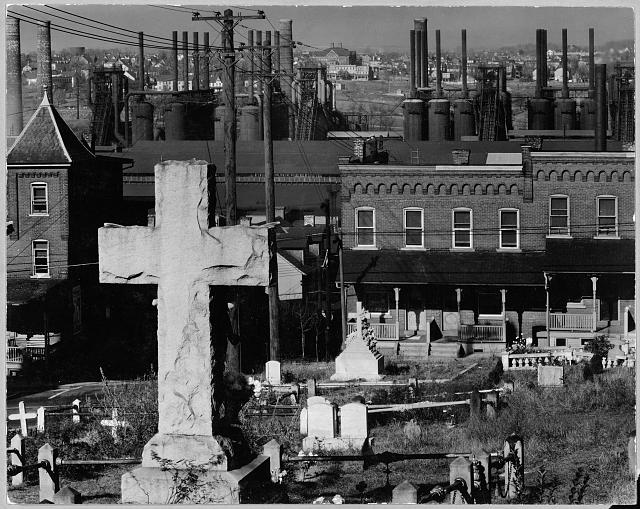
The two images at right are some of his architectural and cultural pieces. “Walker Evans (American, 1903 - 1975) (Getty Museum).” The J. Paul Getty in Los Angeles, www.getty.edu/art/collection/artists/1599/walker-evans-american-1903-1975/.
Farm Security Administration:
To help with the reconstruction of rural areas, farm loans, and subsistence homestead programs, in 1937 the Farm Security Administration (FSA) was created. This administration was not for relief, rather worked within the United States to see what client needed loans and could not get them. The loans that were given were to help with the cost it takes to receive land, equipment, livestock, and seeds. The Farm Security Administration did aid in healthcare, education, and training for those clients participating in the FSA in order to make them self-sufficient. In a memorable program from the FSA, photographs were taken to record the conditions, people, culture, and the land of the rural United States.
“America's Great Depression and Roosevelt's New Deal.” Omeka RSS, dp.la/exhibitions/exhibits/show/new-deal/recovery-programs/farm-security-administration.
#4 David Prifti

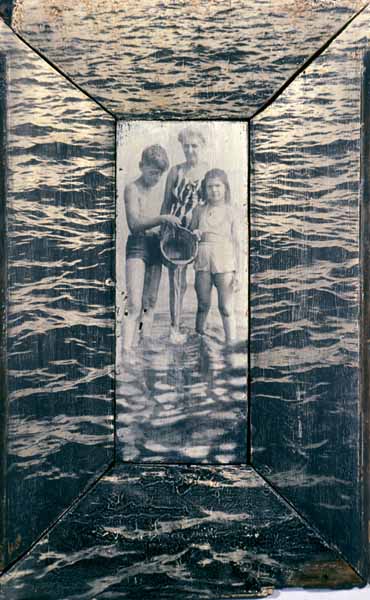
David Prifti was born in 1961 and died in 2011 from pancreatic cancer. Throughout his time he was a teacher and an artist. At the beginning of his career, he focused on Photographic Assemblages and Tintypes. He was inspired by what built him up to be the person he is, which made his art very personal. In 2005 his outlook changed and used wet plate photography much more. He made intriguing pieces on an 8x10 metal plate through their subject and quality. Wet plate photography makes Prifti feel committed to himself and the final image because it is such a long and intensive process.
The top right image is an example of Prifti's beautiful work on a wet plate. The bottom right is one of his assemblages.
“David Prifti - Photographic Assemblages & Tintypes.” POBA: Where The Arts Live, poba.org/poba_artists/david-prifti-photographic-assemblages-tintypes/.
#3 Eva Watson Schütze
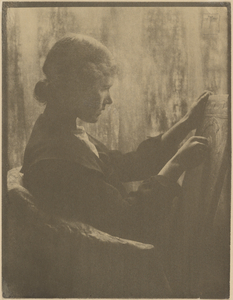
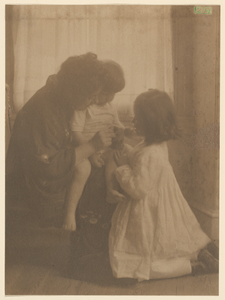 Eva Watson Schütze was born in 1867 in New Jersey. In photography, her aesthetic was the pictorialist style, and she believed in the future of women's photography. She didn't want to be known as a woman photographer, rather just a photographer. She studied at the Pennsylvania Academy of the Fine Arts for six years focusing on painting, when she later realized she wanted to do photography. Her work was showcased in Paris and London and the exquisite Pennsylvania Salon. In addition, she wrote about photography. When she got married she moved to Chicago where she was able to still succeed with photography. She became a member of London's, Linked Ring, and founded the movement in the 20th century that said photography was a fine art. Eva Watson-Schütze spent her life taking photographs and painting.
 The painting at the top left is a portrait of a young artist from early 1900's. "The Toy" is the bottom left picture and is also from early 1900's.
“Eva L. Watson-Schutze (American, 1867 - 1935) (Getty Museum).” The J. Paul Getty in Los Angeles, www.getty.edu/art/collection/artists/1902/eva-l-watson-schutze-american-1867-1935/.
#2 Anna Atkins
Anna Atkins is from England, where she lived between 1799 and 1871. She trained as a botanist, photographing botanical specifies for scientific research and as a way of recording data. The book, British Algae: Cyanotype Impressions, was one of the first books that used light-sensitive materials as illustrations. Because she created a book with this information and medium it became accurate for scientific means. She learned her techniques from other inventors but applied it to science herself.


These two photos show how you can tell detail within the leaves of the plants. Instead of using a camera, she used cyanotypes to illustrate the various botanical specimens.
“Anna Atkins (British, 1799 - 1871) (Getty Museum).” The J. Paul Getty in Los Angeles, www.getty.edu/art/collection/artists/1507/anna-atkins-british-1799-1871/. Accessed 13 Sept. 2017.
#1 Lewis Hine
Lewis Hine is an American artist from Wisconsin who lived between 1874 and 1940. He was originally an educator and teacher in Chicago and New York where he used photography as a way to document. He worked for the National Child Labor Committee, as well as National Research Project of the Works Projects Administration where he was the first to use photography as a tool for documenting. At some point in his life, his art changed from social photography to interpretive, to focus on the art behind his photography instead of documentation when the government was changing.


His documented work the perspective and exposed the reality of everyday lives in the early 1900's.
“Lewis W. Hine (American, 1874 - 1940) (Getty Museum).” The J. Paul Getty in Los Angeles, www.getty.edu/art/collection/artists/1566/lewis-w-hine-american-1874-1940/. Accessed 13 Sept. 2017.


No comments:
Post a Comment